Of all the things people worry about before giving birth, tearing is near the top of the list. It's a fair worry. But it's also one of the few parts of birth you can actually prepare for.
Perineal massage gets most of the attention, and for good reason — it's backed by solid research. It's just one piece of the picture, though. How your pelvic floor moves, how you breathe and push, and what positions you birth in all play a role too.
In this post, we'll cover what the research really says about perineal massage, exactly how to do it, and how pelvic floor physical therapy helps you walk into birth feeling prepared instead of scared.
How Common Is Tearing During Birth?
Very common — and usually minor. More than 85% of people who have a vaginal birth experience some perineal trauma, and about 60–70% need stitches. Most of these are first- or second-degree tears that heal well.
First degree: Skin and the surface tissue of the perineum only
Second degree: Skin plus perineal muscle (the most common tear needing stitches)
Third degree: Extends into the anal sphincter muscle
Fourth degree: Extends through the anal sphincter into the lining of the rectum
Third- and fourth-degree tears are much less common, but they're the ones that matter most for long-term bowel control, pain, and sexual comfort. Most prevention strategies focus on lowering that risk.
What raises your risk of tearing
A first vaginal birth
A larger baby, or a baby facing up ("sunny side up")
Forceps or vacuum-assisted delivery
A very fast pushing stage
Routine episiotomy
Some of these are out of your control. Others — how your pelvic floor responds, how you push, and what your birth team does during pushing — are things you can influence.
Does Perineal Massage Actually Work?
Yes — especially if this is your first vaginal birth. A Cochrane review of four trials with nearly 2,500 women found that perineal massage in the last weeks of pregnancy lowered the chance of perineal trauma needing stitches. Most of that benefit came from fewer episiotomies, and it was strongest for first-time births.
For people who had given birth vaginally before, massage didn't change tear rates. But it did lower the number who reported ongoing perineal pain three months after birth.
What it didn't do in that review was change the rate of first- through fourth-degree tears on its own. That's why we think of perineal massage as one tool, not a guarantee. It also helps in a way studies don't measure well: it teaches you what stretch and pressure feel like, and how to relax into them instead of bracing. That's exactly the skill you'll use when your baby crowns.
Warm compresses during pushing help too
A separate Cochrane review found that warm compresses held on the perineum during the pushing stage cut the risk of third- and fourth-degree tears roughly in half. It's low-tech and low-risk, so add it to your birth preferences and ask your provider or midwife about it ahead of time.
How to Do Perineal Massage: Step by Step
When to start: Around 34–35 weeks of pregnancy. Check with your OB or midwife first, and skip it if you have placenta previa, an active vaginal infection or herpes outbreak, ruptured membranes, or a risk of preterm labor.
How often: One to two times a week is a great goal. You don't need to do it daily — studies saw benefit even at lower frequencies.
Set up. Wash your hands and trim your nails. A warm bath or shower beforehand helps the tissue relax. Use a lubricant like a natural oil (almond, olive, or coconut) or a water-based lube.
Get comfortable. Lie semi-reclined with pillows behind your back and your knees bent and apart. A mirror helps the first few times. A partner can also do the massage using their index fingers.
Insert your thumbs. Place your thumbs about 1 to 1.5 inches (3–4 cm) inside the vaginal opening, pads facing down toward your rectum.
Press and hold. Gently press down and out toward the sides until you feel a stretch or mild tingling. Hold for 1–2 minutes while you breathe slowly and let your pelvic floor soften.
Sweep in a U-shape. Slowly move your thumbs up and down the sides of the vaginal opening in a U-shape, focusing on the lower half. Continue for a few minutes.
Keep it to about 5 minutes total. Mild stretching or tingling is expected. Sharp pain is not — ease off.
Pro tip: As you hold the stretch, imagine your pelvic floor gently dropping and widening as you exhale. Practicing that "let go" response now is great rehearsal for pushing.
How Pelvic Floor Therapy Helps You Prepare for Birth
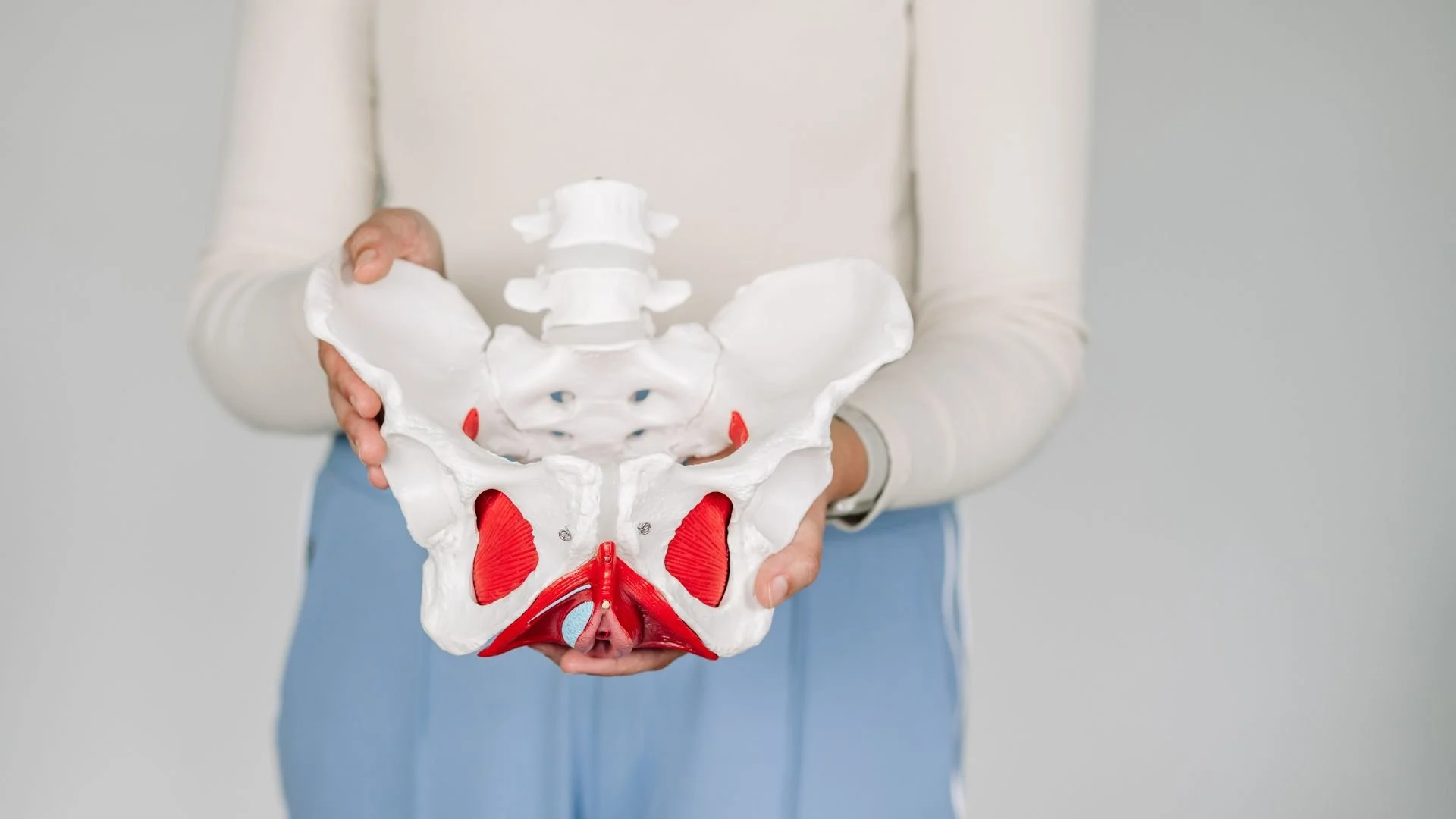
Perineal massage stretches the tissue. Pelvic floor physical therapy prepares the whole system that has to open for your baby. At Awake, birth prep visits are a full hour, one-on-one, and tailored to your body and your birth plans.
Learning to relax your pelvic floor, not just squeeze it
Most people have heard of Kegels. Far fewer know how to release their pelvic floor — and that's the skill birth requires. Many pregnant patients we see hold tension in their pelvic floor without realizing it, especially if they're athletes, have a history of pelvic pain, or tend to clench under stress. We assess how your muscles contract and relax, and teach you to lengthen them on cue.
Practicing pushing before the big day
We help you coordinate breath, core, and pelvic floor so pushing is effective without straining or bearing down against a tight pelvic floor. You'll practice different pushing strategies, including breathing your baby down versus directed pushing, so you know what each feels like.
Finding birth positions that work for your body
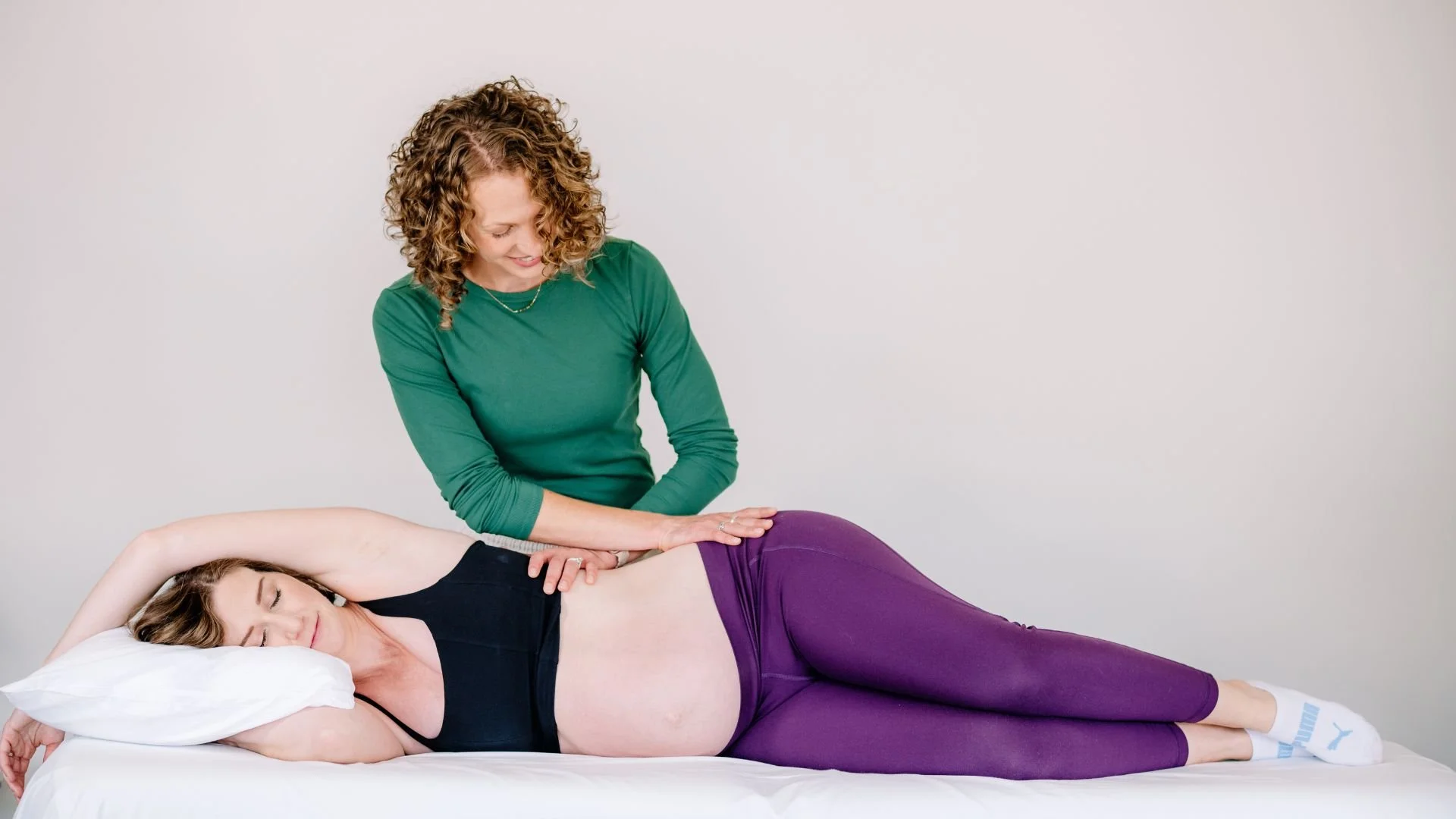
We'll explore positions that open the pelvis and take pressure off the perineum — side-lying, hands and knees, supported squats, and more — and how to adapt them with an epidural.
Hands-on perineal prep and partner coaching
If you'd like, your PT can assess your perineal tissue and coach you (and your partner) on perineal massage technique, so you're confident you're doing it right.
Addressing pain and discomfort along the way
Pregnancy pelvic girdle pain, low back pain, round ligament pain, and leaking can all make the third trimester rough. Treating them keeps you moving, which is good preparation for labor.
Planning your recovery
We'll talk through what's normal after birth, how to care for your perineum, and when to start postpartum pelvic floor therapy. That way, recovery isn't an afterthought.
We recommend starting birth prep sessions around 28–32 weeks, which leaves time to practice. Learn more about our Pregnancy Pelvic Therapy & Birth Prep, and how we partner with other Minnesota birth professionals in A Collaborative Approach for Minnesota Families Preparing for Birth.
Perineal Massage & Tearing FAQs
When should I start perineal massage?
Most research and providers suggest starting around 34–35 weeks of pregnancy, once or twice a week. Check with your OB or midwife first.
Does perineal massage prevent tearing?
It lowers the chance of perineal trauma needing stitches, mostly by reducing episiotomies, and works best for first-time vaginal births. It doesn't guarantee you won't tear, but it's a simple, low-risk way to prepare.
Is perineal massage supposed to hurt?
You should feel stretch, pressure, or mild tingling or burning. Sharp pain means ease off. If massage is consistently painful, a pelvic floor PT can check for muscle tension or tissue sensitivity.
Can my partner do perineal massage?
Yes. Partners typically use their index fingers instead of thumbs, with the same downward and U-shaped strokes. Communicate throughout about pressure.
Can pelvic floor therapy prevent tearing?
No one can promise zero tearing. Pelvic floor PT can lower some of the risk factors you can control: a pelvic floor that won't relax, ineffective pushing, and limited positions. It also helps you feel more prepared and confident.
When should I start pelvic floor therapy during pregnancy?
Anytime you have symptoms like pain or leaking. For birth prep specifically, we suggest starting around 28–32 weeks.
What if I tear anyway?
Tears heal, and support helps. Postpartum pelvic floor therapy can address scar tissue, pain, leaking, and painful sex after birth. See our Postpartum Pelvic Therapy page.
Birth Prep Pelvic Floor Therapy in Woodbury, MN
You can't control everything about birth, but you can walk in prepared. Our Doctors of Physical Therapy help you understand your body, practice the skills birth asks of you, and plan for a smoother recovery.
Awake Pelvic Health & Wellness is in Woodbury and serves families from St. Paul, Lake Elmo, Stillwater, Hudson, Oakdale, Cottage Grove, Minneapolis, and across the East Metro.
Ready to start preparing? Call (651) 432-0250 or request an appointment. Our team will get back to you within one business day.
This article is for educational purposes and isn't a substitute for individual medical advice. Talk with your OB, midwife, or healthcare provider before starting perineal massage.