SPD Pain in Late Pregnancy: You Don't Have to Just Wait It Out
"There's nothing you can do until the baby comes"
If you've been told this, you're not alone. And if you're pregnant weeks, chasing a toddler, and crying when you roll over in bed, three more weeks can feel impossible.
Here's what we want every pregnant mom to know: symphysis pubis dysfunction (SPD) and pelvic girdle pain are common, but they are not something you just have to endure. Research supports physical therapy, exercise, and support belts for pelvic girdle pain during pregnancy. Most moms feel meaningfully better with the right care.
What SPD actually is
Your pubic symphysis is the joint at the front of your pelvis where your two pubic bones meet. In pregnancy, hormones loosen the ligaments so your pelvis can open for birth. Sometimes the two sides start moving unevenly, and the muscles around the pelvis grip hard to compensate.
That's why SPD pain shows up with movements that load one leg or spread your legs apart: stairs, getting out of the car, rolling in bed, standing on one leg to put on pants, and carrying a toddler on your hip.
What you can do starting today
Keep your knees together when you roll over, get out of bed, or get out of the car. Think of moving as one unit.
Sleep with a pillow between your knees and ankles. A pregnancy pillow that supports your belly and legs helps even more.
Take stairs one step at a time, leading with your less painful leg going up.
Sit down to put on pants, socks, and shoes.
Take smaller steps and avoid wide stances, like getting in a bathtub or straddling a car seat base.
Try a pelvic support belt. Many moms get noticeable relief, especially when on their feet. A PT can help you find the right fit and placement.
Carry your toddler in front, not on one hip, or sit down and let them climb into your lap.
How pelvic PT helps SPD
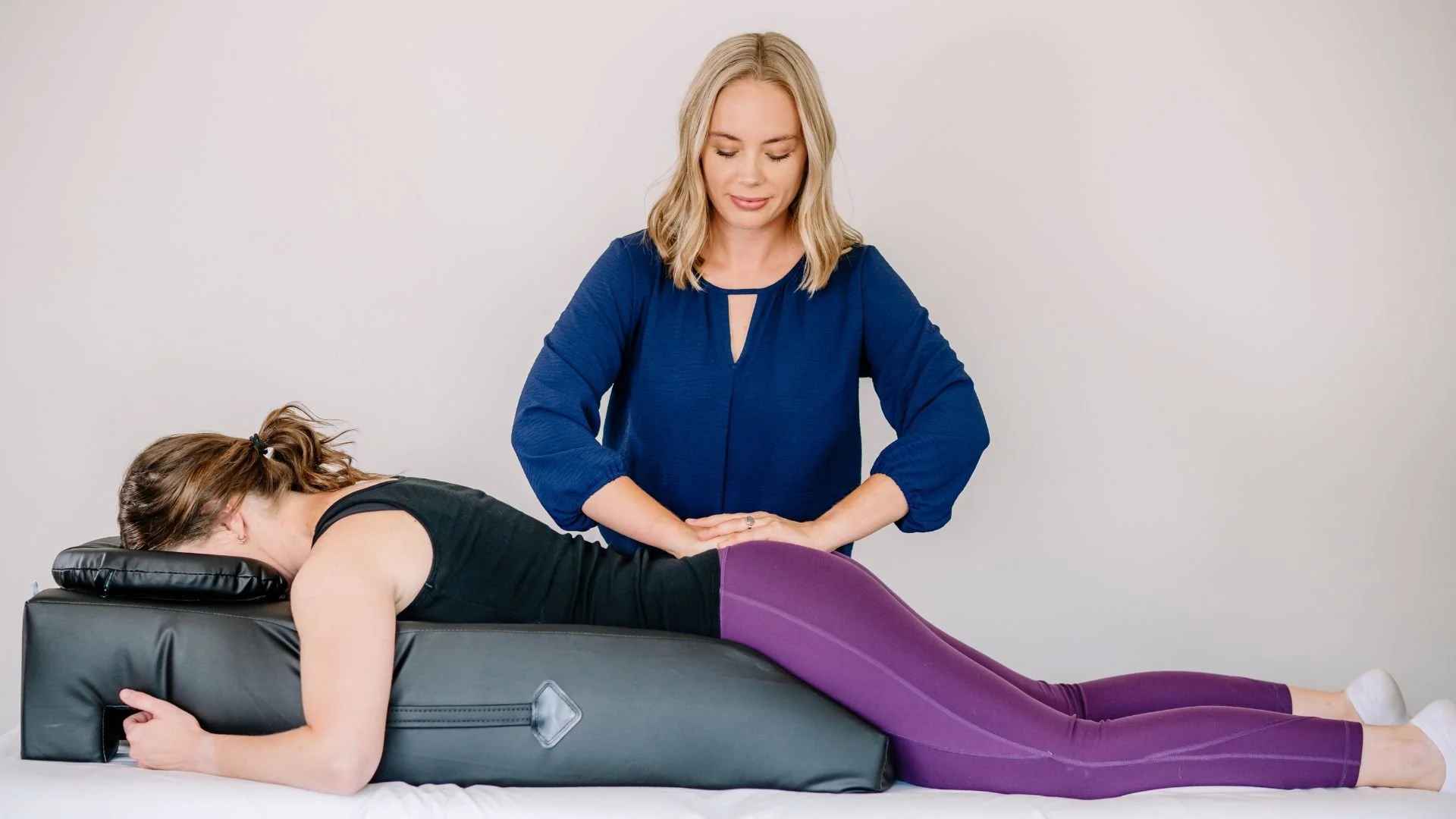
In a one-hour visit, we look at how your whole pelvis is moving, not just where it hurts. Treatment usually includes gentle hands-on work to calm the muscles that are guarding, techniques to help your pelvis move more evenly, and a few simple exercises to support it. We also tailor everything above to your house, your job, and your kids.
It also helps to plan ahead for labor. Some positions that open the pelvis can aggravate SPD, so we'll talk about how to protect your pubic joint during birth and share that plan with your birth team.
[patient story: a mom with SPD late in pregnancy and how quickly she felt relief]
Get help now, not after birth
Call (651) 432-0250 or request an appointment. We serve moms from Woodbury, Stillwater, Lake Elmo, Cottage Grove, Oakdale, Hudson, and St. Paul.