

If you have endometriosis, you probably already know the pain doesn't politely stay in your uterus or show up only during your period. It flares when you stand too long. It burns when you pee. It makes sex something you dread. And somewhere along the way, you may have collected a few more diagnoses — or at least a few more symptoms nobody could explain.
You're not imagining the pattern. At Awake Pelvic Health & Wellness, we see it every week: patients with endometriosis who also live with bladder pain, flushing and food reactions, dizziness when they stand, or joints that bend a little too far. Research is starting to catch up to what patients have been saying for years.
In this post, we'll walk through what endometriosis pelvic pain really feels like, why endo so often shows up alongside interstitial cystitis (IC), mast cell activation syndrome (MCAS), and POTS, why sex can hurt, and how our whole-body, root-cause approach to pelvic floor physical therapy helps you feel like yourself again.
What Endometriosis Pelvic Pain Actually Feels Like
Endometriosis is a chronic, inflammatory condition where tissue similar to the uterine lining grows outside the uterus — on the ovaries, bladder, bowel, pelvic walls, and sometimes beyond. It affects roughly 1 in 10 women and people with a uterus, and the average wait for a diagnosis is still measured in years. One UK primary-care study found a median delay of 9 years from first symptoms to diagnosis.
Painful periods are the symptom everyone has heard of. But endometriosis pelvic pain often looks like this, too:
Deep, aching pelvic pain on days you're nowhere near your period
Sharp or stabbing pain with ovulation, bowel movements, or a full bladder
Pain during or after sex, especially with deep penetration
Low back, hip, tailbone, or SI joint pain that doesn't respond to typical treatment
Bloating ("endo belly"), constipation, or diarrhea that flares with your cycle
Urinary urgency, frequency, or burning with no infection on your test
Fatigue that sleep doesn't fix
If several of these sound familiar, it's worth asking your provider about endometriosis — and worth knowing that pelvic floor physical therapy can help whether or not you have a surgical diagnosis yet. (Still hearing that period pain is "normal"? Read our Five Myths About Endometriosis and 5 Ways Pelvic Floor Therapy Helps with Painful Periods.)
Why Endometriosis Pain Spreads Beyond the Lesions
Here's something many people are never told: the size or stage of your endometriosis doesn't reliably predict how much pain you feel. That's because endo pain is driven by more than the lesions themselves. Three things tend to stack on top of each other:
Inflammation and nerve growth. Endometriosis lesions grow their own nerve fibers and are packed with immune cells, including mast cells. These release inflammatory chemicals that make nearby nerves more sensitive.
A guarding pelvic floor. When something hurts month after month, the muscles around it brace. Over time, the pelvic floor, hips, abdominal wall, and diaphragm can stay tight and short, which creates its own pain — with sex, sitting, peeing, and pooping.
A sensitized nervous system. After years of pain signals, the spinal cord and brain can turn up the volume. This is called central sensitization. It's real, physical, and changeable — not "in your head."
This is why excision surgery, while often essential, doesn't always resolve every symptom on its own. The muscles, fascia, and nervous system have been adapting to pain for years, and they need their own care. It's also why we look at your whole body, not just your pelvis.
The Endometriosis, IC, MCAS & POTS Connection
If you have endometriosis and also deal with bladder pain, mysterious allergic-type reactions, or lightheadedness when you stand, you're not a medical mystery. These conditions cluster together far more often than chance would predict, and we see the overlap constantly in our Woodbury clinic.
Condition
What it is
How it can show up alongside endo
Interstitial cystitis (IC) / bladder pain syndrome
Chronic bladder pain and pressure without infection
Urgency, frequency, burning, pain as the bladder fills, flares with your cycle or certain foods
Mast cell activation syndrome (MCAS)
Mast cells (immune cells) release histamine and other chemicals too easily
Flushing, hives, itching, food or scent reactions, bloating, brain fog, more inflammation and pain
POTS (postural orthostatic tachycardia syndrome)
A form of dysautonomia — the autonomic nervous system struggles to regulate heart rate and blood flow
Racing heart, dizziness, or fatigue when standing; pain and fatigue that worsen around your period
Hypermobility (hEDS / HSD)
Connective tissue that's more lax than usual
Loose or unstable joints, pelvic floor and core that over-grip to create stability, prolapse symptoms, easy bruising
Endometriosis and interstitial cystitis: the "evil twins"
Endometriosis and IC overlap so often that researchers nicknamed them the "evil twins" of chronic pelvic pain. In one prospective study of 178 patients with chronic pelvic pain, 65% were diagnosed with both conditions. A 2024 meta-analysis found the overlap ranged widely — from about 15% to 78% depending on the study — but it was consistently higher than IC rates in the general population. The authors' takeaway: if endo treatment isn't relieving your pain, the bladder should be evaluated too. (Learn more on our Bladder Issues page.)
Endometriosis and MCAS: the mast cell link
Mast cells are part of your immune system, and endometriosis lesions contain unusually high numbers of activated ones. Recent research describes a feedback loop: estrogen activates mast cells in lesions, mast cells release histamine and other chemicals that sensitize nerves, and sensitized nerves trigger more mast cell activity. For someone who also has MCAS, that loop may run even hotter. It helps explain why many patients notice their pelvic pain, bladder symptoms, and gut symptoms all flare together.
Endometriosis and POTS (and hypermobility)
POTS, MCAS, and hypermobility are already known as a common "triad." Newer research suggests endometriosis may belong in the conversation. A 2026 study presented at the American Academy of Neurology reviewed 1,322 women with POTS and found that 17.3% also had endometriosis — well above the roughly 10% seen in the general population. Women with POTS and endo were also more likely to have MCAS (18.8% vs. 3.1%) and Ehlers-Danlos syndrome (33.2% vs. 13.1%) than those without endo.
What this means for you
Researchers are still working out why these conditions travel together. Shared threads likely include inflammation, immune and mast cell activity, connective tissue differences, and a nervous system stuck on high alert. You don't need a perfect explanation to get better, though. What you need is a provider who sees the whole picture — and doesn't treat your bladder, gut, nervous system, and pelvis as four separate problems.
Painful Sex with Endometriosis: Common, Not Something to Push Through
Pain with sex (dyspareunia) is one of the most common — and least talked about — symptoms of endometriosis. In a Canadian survey of more than 28,000 women, about half of those with diagnosed endometriosis reported painful sex, nearly double the rate of those without it.
Endo-related sex pain usually falls into one or both of these patterns:
Deep pain with thrusting or certain positions, often from lesions near the cervix, uterosacral ligaments, or behind the uterus, plus tension in the deep pelvic floor
Pain at the entrance (burning, tearing, or a "wall" feeling), often from pelvic floor muscles that guard and won't relax, and sometimes from bladder or nerve sensitivity that overlaps with IC
The pain often lingers afterward as cramping, bladder irritation, or a flare the next day. Many patients start bracing before intimacy even begins, which tightens the muscles further and makes the next time worse. Understandably, it can strain relationships and leave you feeling disconnected from your own body.
The good news: the muscle, nerve, and fascia pieces of painful sex are very treatable. Pelvic floor physical therapy helps the pelvic floor learn to lengthen and relax, calms sensitized tissue, and gives you tools — positions, pacing, dilators, and breath — so intimacy can feel safe again. For more on the connection side, see Emotional and Physical Intimacy.
Our Holistic Approach to Endometriosis Pelvic Pain
At Awake, we don't just chase the spot that hurts. Every session is a full hour, one-on-one with a Doctor of Physical Therapy trained exclusively in pelvic health — no aides, no 30-minute double-booking. That time matters when your symptoms span several body systems.
1. We listen to your whole story
Your first visit includes a detailed conversation about your cycle, bladder, bowels, sexual health, energy, flares, triggers, and any diagnoses like IC, MCAS, POTS, or hypermobility. Many of our patients have felt dismissed or been told "everything looks fine." We believe you, and we use what you know about your body to guide your care.
2. We treat the pelvic floor and everything connected to it
Depending on what we find, your plan may include:
Internal and external pelvic floor release to calm guarding muscles behind deep pain and painful sex
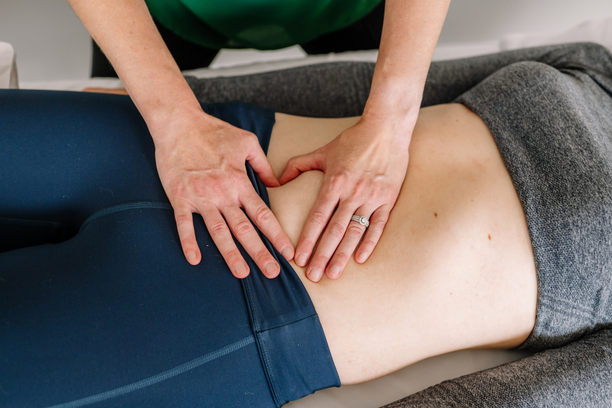
Myofascial release and visceral mobilization for abdominal wall tension, adhesions, scar tissue after excision surgery, and endo belly
Dry needling and cupping for stubborn trigger points in the hips, abdomen, and low back
Breathwork and diaphragm retraining to coordinate your breath, core, and pelvic floor
Bladder and bowel retraining for urgency, frequency, and constipation
Pilates-based rehab to rebuild strength and stability without triggering flares
3. We adapt care for MCAS, POTS, and hypermobility
A one-size-fits-all program can backfire with these conditions. So we adjust:
For POTS: we often start with lying-down and seated exercise, build tolerance gradually, and plan sessions around your energy rather than pushing through.
For MCAS: we pace manual therapy and exercise to avoid setting off flares, and we pay attention to heat, intensity, and scented products in the treatment room.
For hypermobility: we focus on control and stability instead of more stretching, since a pelvic floor that over-grips is often trying to stabilize loose joints.
For everyone: we build a flare plan you can use at home, so a bad day doesn't erase your progress.
4. We calm your nervous system
Because sensitization drives so much endo pain, nervous system regulation is built into treatment — down-training techniques, breath, gentle movement, and pain education that helps your brain stop sounding the alarm. (Curious about the science? Read Vagus Baby! Learn About Your Vagus Nerve.)
5. We work as part of your team
Pelvic floor PT doesn't cure endometriosis, and we'll never pretend it does. It works best alongside the rest of your care team — excision specialists, gynecologists, urologists, allergists or immunologists for MCAS, cardiology or autonomic specialists for POTS, GI providers, dietitians, and mental health support. We're glad to communicate with your providers and help you find the right ones. Learn more about our pelvic pain physical therapy, or read our earlier post on pelvic floor therapy for endometriosis.
Endometriosis Pelvic Pain FAQs
Can pelvic floor physical therapy help endometriosis pain?
Yes. Pelvic floor PT doesn't remove endometriosis lesions, but it treats the muscle tension, fascial restrictions, and nervous system sensitivity that drive much of endo pain. Many patients see less pelvic pain, easier bowel and bladder function, and more comfortable sex.
Do I need an endometriosis diagnosis to start pelvic floor therapy?
No. You can start pelvic floor PT while you're still seeking answers, waiting for surgery, or recovering afterward. In Minnesota, you can see a physical therapist without a referral, though some insurance plans require one.
Is there a link between endometriosis and MCAS?
Research shows endometriosis lesions contain high numbers of activated mast cells, which release histamine and other chemicals that sensitize nerves. Early studies also find MCAS is more common in people with endometriosis, especially those who also have POTS.
Is endometriosis linked to POTS?
Emerging research suggests so. A 2026 study of 1,322 women with POTS found that 17.3% also had endometriosis — higher than the roughly 10% rate in the general population.
Why does sex hurt with endometriosis?
Sex can hurt because of lesions deep in the pelvis, pelvic floor muscles that guard and won't relax, and nerves that have become more sensitive. Pelvic floor PT addresses the muscle and nerve pieces, which often brings significant relief.
Can I have both endometriosis and interstitial cystitis?
Yes, and it's common. The two overlap so often they're called the "evil twins" of chronic pelvic pain. If bladder pain, urgency, or frequency continues after endo treatment, ask your provider about IC.
Will pelvic floor therapy make my MCAS or POTS flare?
It shouldn't, when it's paced well. We adjust intensity, positioning, and pacing for your symptoms and build a flare plan with you. Let us know about any diagnoses and triggers at your first visit.
Endometriosis Physical Therapy in Woodbury, MN
You deserve care that connects the dots — between your pelvic pain, your bladder, your gut, your nervous system, and the rest of your life. Awake Pelvic Health & Wellness is the largest pelvic health specialty clinic in the Twin Cities, and our team works with endometriosis, IC, MCAS, POTS, and hypermobility every day.
We're located in Woodbury and serve patients from St. Paul, Lake Elmo, Stillwater, Hudson, Oakdale, Cottage Grove, Minneapolis, and across the East Metro.