Abdominophrenic Dyssynergia: How Pelvic Floor Physical Therapy Can Help
If you’ve ever felt like your abdomen expands dramatically as the day goes on — tight, distended, uncomfortable — yet imaging shows “nothing significant,” you are not imagining it.
One possible and often overlooked cause is abdominophrenic dyssynergia (APD) — a coordination issue between your diaphragm, abdominal wall, and pelvic floor.
And yes — pelvic floor physical therapy can absolutely help.
Abdominophrenic dyssynergia is a functional gastrointestinal disorder (FGID). That means the structure of your organs is normal — but how they function and coordinate is not.
Normally during digestion:
The abdominal wall gently firms and increases tone
The respiratory diaphragm relaxes upward
The pelvic floor responds appropriately to bowel signals
In APD, the opposite pattern happens:
The abdominal wall relaxes outward
The diaphragm contracts and pushes downward
Pressure shifts forward into the belly
The abdomen visibly distends
This can happen even without excess gas.
The result?

Bloating that worsens throughout the day
A feeling of fullness or pressure
Constipation
Difficulty emptying
Abdominal or pelvic discomfort
Many individuals with Irritable Bowel Syndrome (IBS) or chronic constipation also show this altered coordination pattern.
It’s Not Just Weak Muscles
For years, bloating was blamed on:
Too much gas
Poor posture
“Weak abs”
Even psychological stress alone
But newer research shows APD is a motor control issue — not simply weakness.
This is about:
Diaphragm coordination
Abdominal wall timing
Pelic floor relaxation patterns
Nervous system regulation
Visceral motility
It’s a pressure management and coordination problem — not a willpower problem.
The Pelvic Floor Connection
Many people with APD also have pelvic floor dyssynergia.
Instead of relaxing during a bowel movement, the pelvic floor:
Contracts
Narrows the outlet
Makes emptying difficult
This creates:
Straining
Incomplete emptying
Slowed transit time
Increased abdominal pressure
The diaphragm, abdominal wall, and pelvic floor are meant to function as a coordinated system. When one piece misfires, the whole system compensates.
How Pelvic Floor Physical Therapy Can Help
At Awake Pelvic Health & Wellness, we approach bloating and digestive dysfunction as a whole-body coordination issue, not just a gut problem.
1. Comprehensive Evaluation
We assess:
Breathing mechanics
Abdominal wall function
Rib cage mobility
Spinal and pelvic alignment
Pelvic floor muscle coordination
Nervous system tone
This isn’t just a quick “do some Kegels” situation. In fact, many people need the opposite — learning how to relax and coordinate.
2. Breathing & Diaphragm Retraining
We restore:
Diaphragm mobility
Rib cage expansion
Proper abdominal wall timing
Pelvic floor responsiveness
When the diaphragm and pelvic floor move in harmony, abdominal pressure normalizes — and distention often improves significantly.
3. Abdominal Wall Re-education
This may include:
Transversus abdominis activation training
Internal oblique coordination work
Pressure control drills
Postural integration
The goal is not bracing all day — it’s responsive, dynamic support.
4. Pelvic Floor Downtraining
If pelvic floor dyssynergia is present, we may use:
Surface EMG biofeedback
Manual therapy
Nervous system regulation strategies
Coordinated bowel retraining techniques
Learning how to relax is often the missing piece.
5. Visceral & Abdominal Mobility
When appropriate, we incorporate:
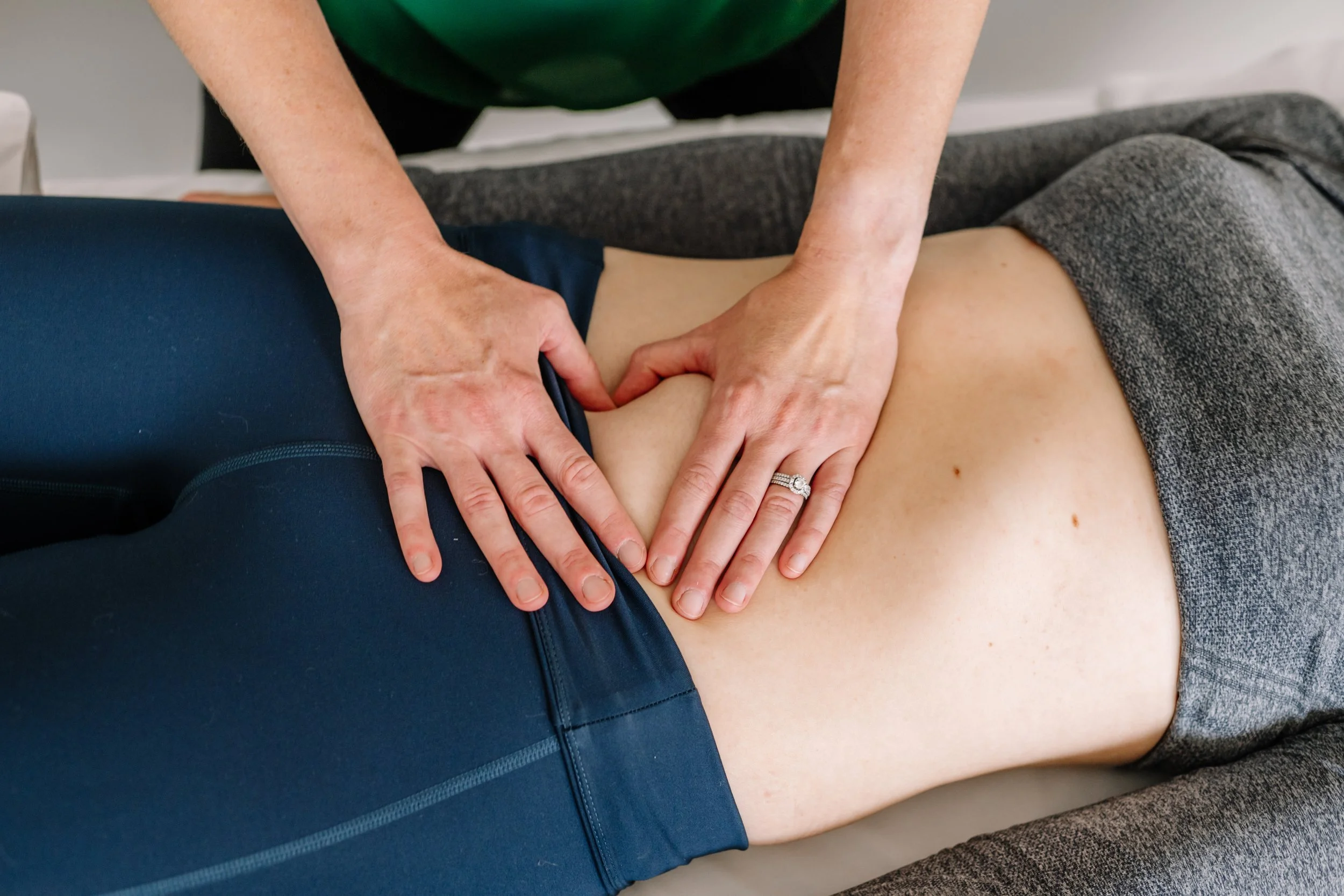
Gentle visceral mobilization
Abdominal wall massage
Intestinal motility support techniques
Home instruction for self-mobilization
Improving organ mobility can support better transit time and reduced pressure buildup.
Why This Matters
Abdominal bloating affects up to 10–25% of healthy individuals — but when it becomes persistent, painful, or visibly distending, it’s not something you just have to “live with.”
If you’ve been told:
“It’s just IBS.”
“It’s stress.”
“Try eliminating more foods.”
“Your tests are normal.”
There may be a coordination pattern underneath that no one has addressed.
Your body isn’t broken.
It may just need retraining.
Could This Be You?
You might benefit from evaluation if:
Your abdomen looks flat in the morning but distends dramatically by evening
You feel pressure or fullness after small meals
You strain with bowel movements
You’ve tried dietary changes without lasting relief
You feel like your core isn’t responding the way it used to
A Whole-Body Approach to Bloating
At Awake Pelvic Health & Wellness, we don’t separate the gut from the pelvic floor, the diaphragm from the nervous system, or the abdomen from the spine.
We look at how everything works together.
Because often, bloating isn’t about what you ate.
It’s about how your system coordinates.
If you’re curious whether abdominophrenic dyssynergia could be contributing to your symptoms, we’d love to help you connect the dots.